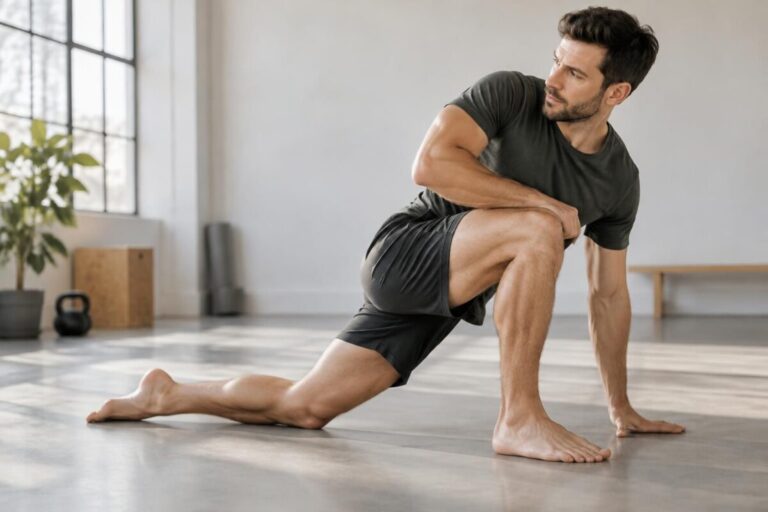
Mobility: wake up the body without pushing it too hard
Hello, Néora here. To wake up your body without jolting it, start with six minutes of slow movements, accompanied by calm, pain-free breathing.
After a motionless night, your back or hips may feel stiff. The goal isn’t to force a stretch, but to gradually regain mobility and flexibility.
Good habits to adopt
- Take a few slow breaths before moving.
- Start with a range of motion that feels easy and comfortable.
- Move from one exercise to the next without aiming for performance.
- Stop if you feel a sharp or unusual pain.
- Focus on the quality of your movements rather than the number of repetitions.
Stiffness that eases with movement is not the same as persistent or radiating pain: in that case, don’t push through it, and seek medical advice. To better understand morning stiffness and mobility and discover gentle movements to release tension, remember that gradual progress comes before range of motion.
A 6-minute mobility routine to start the day
Each movement lasts about one minute. Keep your breathing steady and slow down if you feel your body resisting: ease matters more than how deep you move.
| Duration | Movement | Practical tip |
|---|---|---|
| 1 minute | Lying-down breathing | Breathe in calmly, then let your exhale lengthen. |
| 1 minute | Pelvic tilts | Make small movements without arching your back too much. |
| 1 minute | Upper-back rotations | Gently turn your torso through a comfortable range of motion. |
| 1 minute | Dynamic child’s pose | Slowly move forward and back without putting pressure on your back. |
| 1 minute | Gentle low lunge | Place one knee on the floor if comfortable, and keep your pelvis relaxed. |
| 1 minute | Slow walk | Take a few steps, rolling through your feet and relaxing your shoulders. |
If you’d rather stay in bed, a few simple movements can also help prepare you for your first steps: gently stretch your arms, bring one knee toward you without pulling, then move your ankles. These variations should remain pain-free and are no substitute for professional advice if you have an injury or a known health condition.
How to adapt the movements to how you feel
A common mistake is to immediately aim for a deep stretch. When you wake up, start with controlled movements; you can gradually increase your range of motion as the movements become smoother.
If you feel mildly stiff
Keep moving slowly and notice whether the sensation eases. For example, someone who works sitting down can do pelvic tilts, then walk for a minute before starting the day.
If a movement causes pain
Reduce your range of motion or stop the exercise. Sharp, persistent, or radiating pain, or pain accompanied by other symptoms, calls for medical advice rather than an attempt to push further.
Three steps to build a pressure-free routine
- Prepare your space. Choose a stable spot and keep a chair or wall nearby if your balance feels uncertain.
- Start small. Do the routine two to three times a week, or choose just two movements on days when you’re short on time.
- Progress according to how you feel. When the movements remain comfortable, gradually increase your range of motion without adding speed or unnecessary tension.
The right measure of progress isn’t reaching farther, but moving with greater control and comfort. This routine can complement a workout or serve as a body wake-up on days when you don’t train.
Frequently asked questions about morning mobility
Do you need to do this routine every morning?
It’s not essential. Two to three regular sessions may be enough; adjust the frequency to how you feel and how well you recover.
How long does it take to notice a difference?
You may notice that movement feels smoother after your first few sessions. Lasting progress generally requires consistency over several weeks.
Can you do these movements before exercising?
Yes, this routine can serve as gentle activation. However, adjust the movements to the activity planned and add an appropriate warm-up.
What should you do if your back is still painful?
Don’t try to resolve persistent pain by forcing stretches. Stop any movements that make it worse and seek advice from a healthcare professional.
Thanks for reading! If this resonates with you, I’d love it if you left me a comment at the bottom of the article. — Néora