Hiking: setting off without staying calm ruins your challenge
Hello, it’s Néora.
To take on your challenge, plan your route and take a few minutes to find your calm before setting off.
Hiking challenges your body as much as your concentration: uneven terrain, changing weather and fatigue can quickly affect your morale. A little preparation can help you move forward with more confidence and enjoy nature.
Things to do right away
- Choose a trail suited to your current fitness and endurance.
- Check the weather and confirm your departure and return times.
- Tell someone you trust your route and expected return time.
- Pack your bag with water, a warm layer, a first-aid kit and a fully charged phone.
- Before you start walking, breathe slowly and set yourself an easy first goal, such as reaching the next rest stop.
If you’re getting back to hiking after a break, start with a gradual outing by taking a walk suited to getting back into it, then avoid overdoing it in the first few miles with these tips on not letting enthusiasm ruin your hike.
The trap of rushing off on a hike
Setting off at a fast pace, with a poorly adjusted backpack and barely having checked the route, means letting stress make decisions for you. Fatigue and doubts then take up more space, which can affect your concentration when choosing where to place your feet.
Imagine Lina, who plans a long loop without checking the elevation gain. From the first climb, she feels overwhelmed and worries she won’t be able to manage the distance. A shorter route, chosen to match her energy, would help her regain confidence and enjoy the adventure.
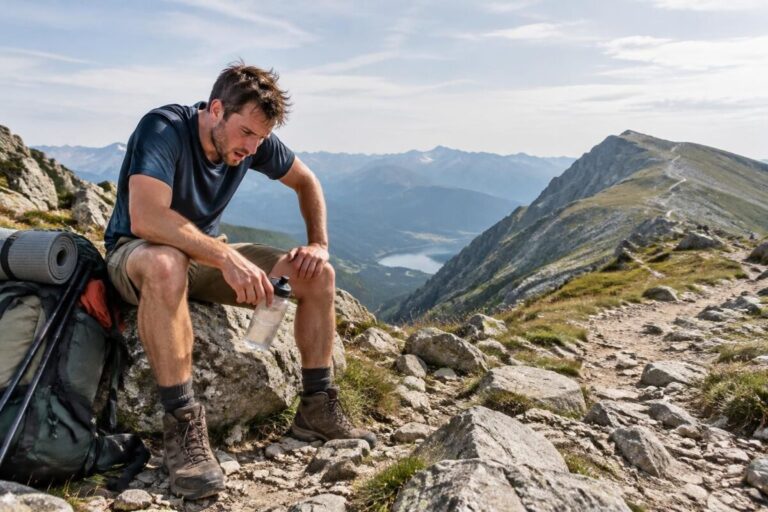
Staying calm doesn’t mean ignoring risks: it helps you assess them without panicking. If you feel dizzy, exhausted or disoriented, stop somewhere safe, drink a little water and reassess what to do next. Turning back or shortening the route may be the wisest decision of the day.
Three steps to move forward with confidence
- Before setting off: choose a realistic distance, identify rest stops and share your route with someone you trust.
- While walking: set a pace that lets you talk, drink regularly and take a break as soon as your concentration starts to fade.
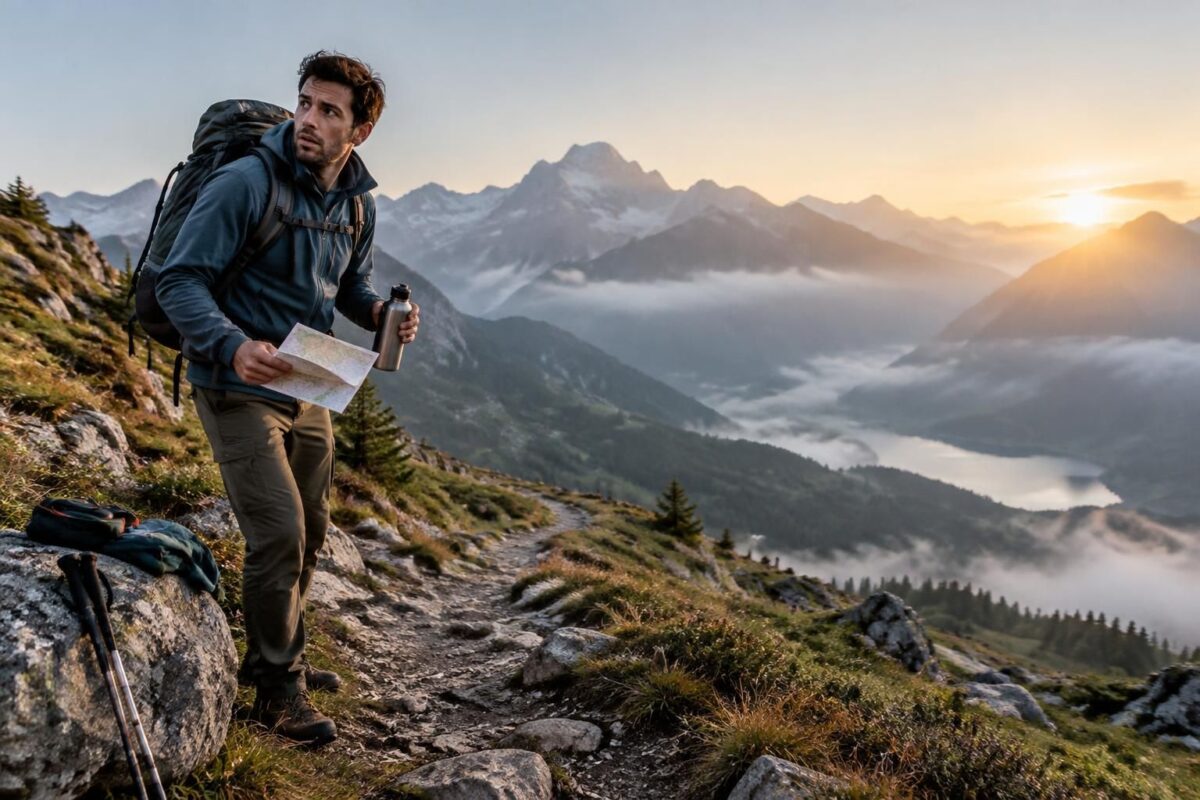
- If something unexpected happens: stop, check your location and the weather, then decide whether to continue, turn back or ask for help.
This approach works just as well for physical challenges as it does for moments of doubt. Slow breathing, relaxed shoulders and a nearby goal can help you regain your focus without forcing yourself to keep going at all costs.
Adjusting your effort to the terrain and your energy
A sandy trail, a steep slope and a wet path don’t challenge your body in the same way. Even on a moderate hike, the duration, elevation gain and weight of your backpack can wear down your endurance over the hours.
To build your fitness, gradually increase the duration or difficulty of your outings, rather than increasing both at the same time. Even a short regular walk can help prepare your legs and teach you to manage your effort better.
| What you notice | Helpful response | Why it helps |
|---|---|---|
| You speed up without realizing it | Slow down and return to a pace where you can talk | You limit early fatigue |
| You’re losing concentration | Take a break somewhere safe and have a few sips of water | You avoid walking on autopilot |
| The weather is getting worse | Check your route and choose a safe way back | You reduce your exposure to bad weather |
| You feel an unusual pain | Stop and assess the situation before setting off again | You avoid making the problem worse |
The right challenge isn’t the one that exhausts you: it’s the one that helps you make progress while still allowing you to get home safely.
Frequently asked questions about staying calm while hiking
How can you stay calm when the trail gets difficult?
Stop somewhere safe, slow your breathing and take stock of the situation. Then check your energy, the weather and the route before deciding whether to continue or turn back.
Should you train before a challenging hike?
Yes. Regular walks and gradual progression help build endurance. Start with outings suited to your fitness level, then gradually increase the duration or elevation gain.
What should you do if you feel afraid while hiking?
Take a break, identify what is worrying you and turn that concern into a practical check: your location, the weather, trail conditions and whether you can contact someone you trust.
Is it safe to hike alone?
It depends on the route, your experience and the conditions. Choose a suitable route, tell someone you trust, keep your phone charged and turn back if the weather or your condition doesn’t allow you to hike safely.
Thanks for reading! If this resonates with you, share your experience in the comments. — Néora